
Yes, sand can clog a drain. Unlike hair or grease, sand does not stick to the pipe wall. It sinks. Water carries it only while the flow is strong, and any low spot, trap or bend lets it drop out and pile up. Over time the pile narrows the pipe and catches hair, soap and paper.
A few grains rinsed off a toy are not a problem. Rinsing beach gear, sandbox sets, muddy boots or a washer load of gritty clothes every week can be. If a drain is already slow or backing up, call (860) 397-8103 and we will send a licensed plumber.
Why sand behaves differently from other clogs
Gravity does the work. Sand is heavy, so it falls out of slow water. Pipes in a home are sloped only a little, and water slows at every trap and elbow.
That is why sand tends to gather at the same few spots: the bottom of a P-trap, the bend under a tub, the low point of a floor drain basin and the belly of a sagging pipe. A thin layer is harmless. A thick layer makes a dam, and the next hair or bit of grease sticks to it.
Where sand and grit come from, and where it lands
Most gritty clogs trace back to one of these sources.
| Source | Where it ends up | What helps |
|---|---|---|
| Rinsing kids or pets after beach, sandbox or yard play | Tub trap and the bend below it | Rinse outside first and use a drain strainer |
| Gritty laundry, such as work clothes or sports gear | Washer standpipe and the main drain | Shake out clothes and use a lint filter on the hose |
| Shower after gardening, hiking or construction work | Shower trap and branch line | Rinse tools outside and use a hair catcher |
| Basement floor drains with a sediment bucket or basin | The basin and trap | Empty the basin and rinse it on a schedule |
| Yard or driveway drains tied to a pipe | Underground pipe and catch basin | Clean the grate and check that the line is not cracked |
| Soil entering through a cracked or offset sewer pipe | The lateral, near the damage | Camera inspection and repair |
How a trap handles sand
A P-trap holds a plug of water that blocks sewer gas. The curve also acts as a small settling pool. Sand drops into the low part of the curve and sits there while water flows over it.
Because of that, a sand-filled trap often drains slowly rather than stopping at once. You see a tub that takes a minute longer each month. Sooner or later the trap fills, and the drain stops. Unscrewing a kitchen or bath trap and emptying it is a normal DIY job. A tub or shower trap is harder to reach, so that call goes to a plumber.
Signs sand or silt has built up
- Gritty residue in the bottom of the tub or sink after draining.
- A drain that gets slower over weeks, not hours.
- Gurgling that starts after rinsing something dirty.
- A floor drain that smells or holds a muddy layer.
- Grit on the strainer or in the washer's hose filter.
- Repeated clogs at the same spot, even right after clearing.
What to do about a gritty clog
Stop sending more down
Shut off the source, whether that is a washer load, a hose or a rinse. More water pushes sand deeper.
Remove the strainer or stopper
Lift out hair and grit by hand. Wear gloves and bag what you find.
Clean the trap
Place a bucket under the trap on a sink or lavatory, loosen the nuts by hand, and empty it. Check the gasket when you put it back.
Flush with water
Run a steady stream for a minute. A steady flow moves loose sand along. Do not add chemicals, since they do nothing for sand.
Call if it comes back
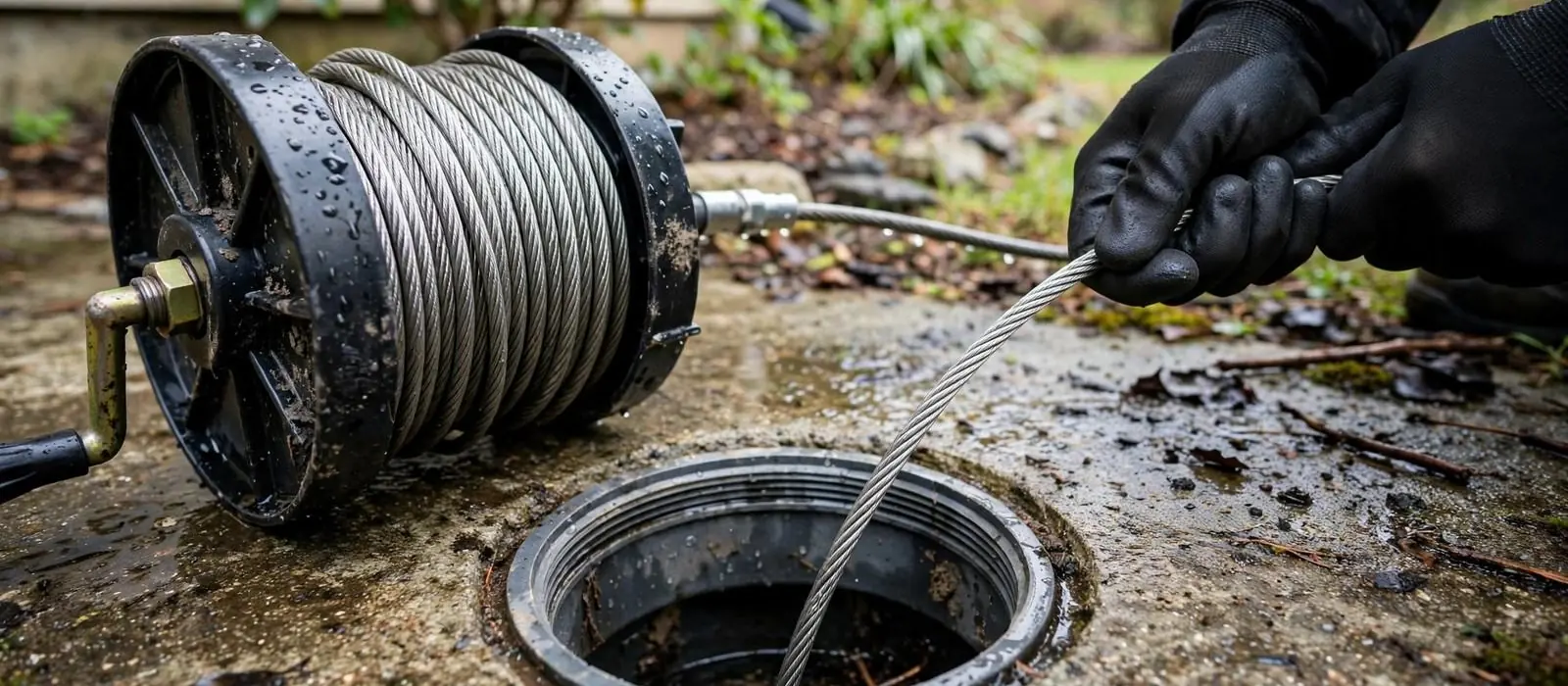
A clog that returns, or involves several fixtures, points to sand sitting further along the line. A cable or a jetting pass pulls it out. See our drain cleaning page.
Sand and the main sewer line
Gritty clogs in the main line often mean something other than rinsing habits. A cracked, offset or open joint in the sewer pipe lets soil wash in. The soil settles in the pipe and builds a dam, so the line backs up again after every cleaning.
Signs include sand or gravel on the cleanout cap or in the snake, repeated main-line backups, or a dip in the lawn above the pipe. A sewer camera shows the break. Our sewer camera inspection page explains what the video reveals and what the next step is.
Floor drains need more than a flush
Basement and garage floor drains collect grit from tracked-in dirt and washer overflow. If the trap dries out, sewer gas can rise. If it fills with silt, water backs up in the basement.
Do not pour a cleaner into a floor drain that is already backing up. Bleach and other chemicals can splash when someone opens the line. Call a plumber for a floor drain that is full of mud.
What affects the cost of clearing sand
Sand jobs vary a lot, so we do not post prices in guides. You get a clear price before work starts.
What moves the price
- Whether the sand sits in a trap or in the branch or main line.
- How hard it is packed and how far in it lies.
- Whether a cable, a jetter or a vacuum approach is needed.
- Whether a camera is needed to find a break letting soil in.
- Whether the pipe needs repair, which changes the job from cleaning to repair.
If you aren't sure where the sand enters, a camera can end the guesswork. Call (860) 397-8103.
Rocky Hill yards, parks and aging lines
Rocky Hill sits along the Connecticut River, and the town has trail and park space, including Quarry Park and Dinosaur State Park. Time outdoors means tracked-in dirt and gritty laundry. A mudroom sink or a basement rinse spot is the first place a strainer pays off.
Town planning figures show about 3,900 housing units were added between 1960 and 1990. Sewer service is provided by the Metropolitan District Commission. If your own line is sound but the whole street backs up, ask MDC. If the sand comes from a lateral on your side, a camera shows where.
Source type: town planning document, state park information, utility service page
Questions homeowners ask
Can a small amount of sand really clog a drain?
A small amount usually flows through. The risk is buildup. Sand settles in traps and low points, and once a layer forms it catches hair and grease. Repeated rinsing is what turns it into a clog.
Will sand dissolve if I use drain cleaner?
No. Sand is mineral grit and chemical cleaners cannot dissolve it. The cleaner may sit above the blockage and splash during repair. Remove the sand with a trap cleaning, a cable or jetting.
What about silt or dirt from a washing machine?
Heavy soil from work clothes can carry silt into the standpipe and the drain. Shake clothes out first, and put a mesh filter on the washer hose if the machine drains into a laundry sink.
How do I know if soil is entering my sewer line?
Sand or gravel in a cleanout, repeated backups at the same point and a dip in the yard are common signs. A sewer camera confirms it and shows where. Cleaning alone gives only short relief.
Can I rinse sandy kids and pets in the tub?
Rinse them outdoors with a hose when you can. If you must use the tub, use a drain strainer and scoop the grit from it afterward. Do not rinse it down.
Who is responsible for a sewer clog caused by sand in Rocky Hill?
It depends on where the clog sits. MDC provides sewer service in Rocky Hill. Ask MDC where its responsibility ends and yours begins. A plumber can show whether the blockage sits in your lateral.
Do you clear sandy drains at night in Wethersfield, Newington or Cromwell?
Yes. Our dispatch line is open 24/7 and we serve those towns from Rocky Hill. After-hours visits are priced differently, and you get a clear price before work starts.
Call the 24/7 line, describe the problem, and we confirm what it will cost before any work starts.