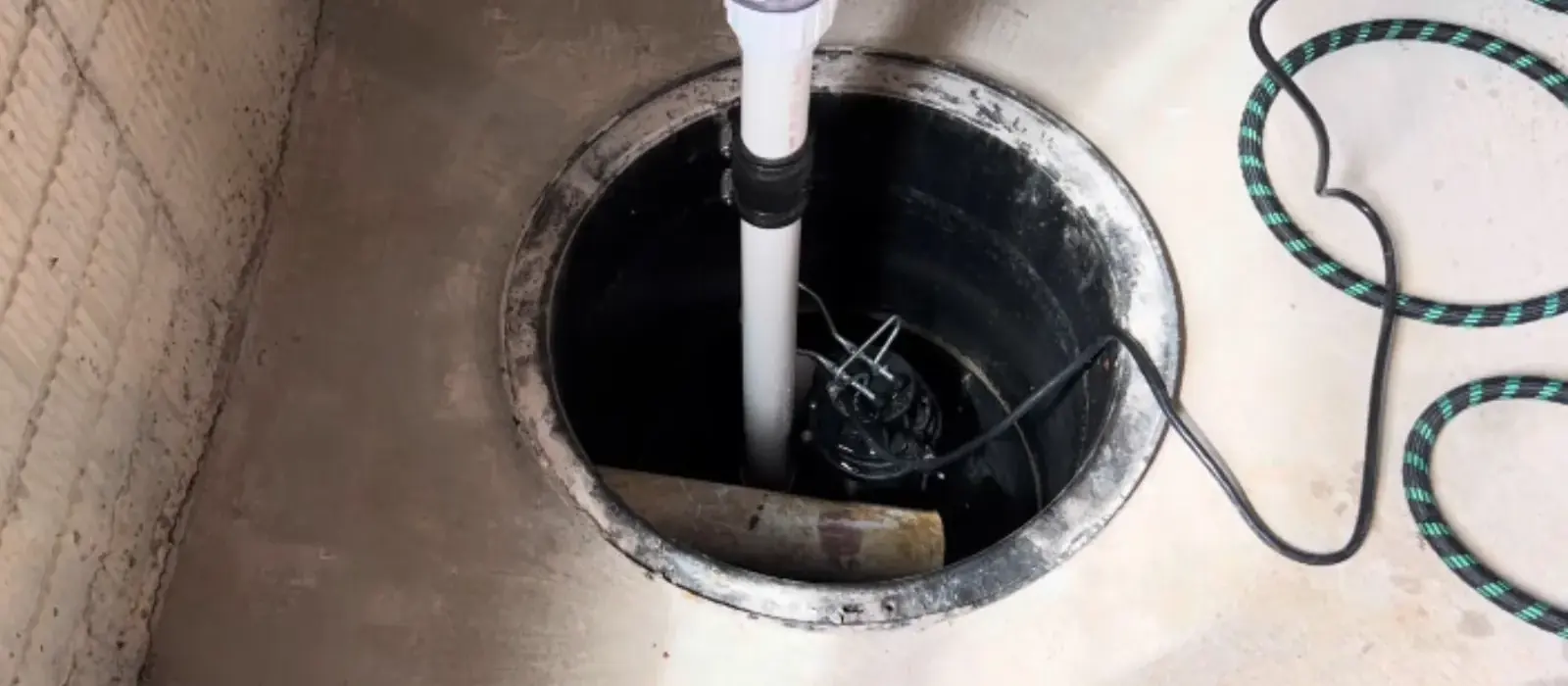
A water-powered sump pump is a backup unit that uses the pressure of your home's water supply to push water out of the sump basin. It has no motor and needs no electricity. When the main pump stops, the float opens a valve, supply water rushes through the unit and the jet pulls basement water out with it.
It works well when the power goes out during a storm, but only if water pressure holds, and it uses a lot of water while it runs. Sump pump stopped and water rising? Call (860) 397-8103 and our 24/7 line will send a licensed plumber.
How a water-powered backup pump works
It connects to a cold water line
A supply pipe runs from your house plumbing to the unit, which hangs or sits in the sump basin beside the main pump. A shutoff valve and a backflow protection device belong on that supply.
A float triggers it
If the water level climbs above the point where the main pump should have started, a float opens the supply valve. The backup stays idle until that happens.
A jet creates suction
Supply water squeezes through a narrow nozzle at high speed. That fast stream creates suction, the same effect as a venturi in a garden sprayer.
Basement water leaves with the supply water
The suction draws sump water into the stream. Both flow out through the discharge pipe together.
It shuts off when the level drops
As the float falls, the supply valve closes and the unit stops using water.
The catch: it needs steady municipal pressure
These pumps depend on the water pressure at your house. Every model lists a minimum supply pressure, and output drops as pressure drops. Check the manufacturer's data sheet for the model you are considering.
Rocky Hill homes are served by the Metropolitan District Commission, which delivers water mostly by gravity from its reservoirs. That means the supply does not rely on household power the way a private well pump does. It does not mean pressure is the same at every house, so test yours with a gauge on an outside spigot before you buy.
A home on a private well will not suit this design, because well pressure comes from an electric pump that stops during an outage.
Water-powered backup compared with battery backup
Both are backups to a main electric pump. They fail in different ways, so the better choice depends on your house.
| Feature | Water-powered | Battery backup |
|---|---|---|
| Power source | Household water pressure | Deep-cycle battery and charger |
| Works in a power outage | Yes, if pressure holds | Yes, until the battery runs down |
| Run time | Not limited by a battery | Limited by battery size and pump load |
| Water use | High while running | None from the supply |
| Maintenance | Test valve and float yearly | Test the battery, replace it every few years |
| Pumping capacity | Falls with low pressure and with high lift | Varies by pump and battery |
| Good fit | Homes with steady municipal pressure | Homes with low pressure or a private well |
What to know about water use
Water use is the most common surprise with this type of pump.
It uses more than it moves
Many models use more supply water than the volume they pump out. The ratio depends on pressure and on how high the water must be lifted. Check the manufacturer's figures.
You pay for the water
Water is billed to MDC ratepayers in Rocky Hill, so a long storm with the backup running adds to the bill. Ask MDC about rates, since we do not state utility charges.
The discharge handles both flows
The pipe carries your basement water and the supply water together. It needs to be sized and routed to handle the combined flow.
It is a backup, not a daily pump
Running one for hours every rainy week is hard on your bill. If your main pump fails often, the fix is a better main pump.
When a water-powered pump makes sense
- Your power goes out often during storms and you want a backup with no battery to maintain.
- Your supply pressure is steady and meets the pump's published minimum.
- You are on municipal water, not a private well.
- Your main pump is in good shape and the backup would run only rarely.
- The discharge pipe can carry the extra flow away from the house.
Check local rules before it goes in
Connecting a water supply to a device that can sit in dirty basin water raises backflow and cross-connection questions. Required protection and any permits are set locally, so we do not state them here.
Ask the Rocky Hill building department what applies to your job, and ask MDC whether it has requirements for this connection. A licensed plumber should install the supply side. Our sump pump service covers backups, basins and discharge piping.
What affects the cost of a water-powered backup
We do not publish prices in guides. These are the factors that decide the price, and you get a clear price before work starts.
What moves the price
- The unit you choose and its capacity at your water pressure.
- How far the supply pipe must run from existing plumbing to the basin.
- The backflow protection and shutoff valve the job needs.
- Whether the discharge piping must be altered or enlarged.
- Whether the main pump and basin also need work during the same visit.
Want to price a backup for your basement? Call (860) 397-8103.
Mistakes to avoid
- Buying one without testing your water pressure first.
- Installing it as the main pump instead of a backup.
- Skipping a yearly test, so a stuck valve or float is found during a storm.
- Leaving the discharge pipe undersized for the combined flow.
- Assuming the backup will keep up with a failed main pump during a long storm.
- Doing the supply connection without checking backflow and permit rules with the town.
Water supply and Rocky Hill basements
The Metropolitan District Commission provides water service in Rocky Hill and delivers it mostly by gravity from its reservoirs. For a water-powered pump, this is a point in its favor. Your pressure does not depend on a household electric pump.
If you are across the line in Cromwell, the water comes from a different system, the Cromwell Fire District Water Department's groundwater wells. Ask the district about pressure and any rules before you plan a connection. Our Cromwell plumber page explains how we cover that side.
Source type: utility service pages, town service information
Questions homeowners ask
Do water-powered sump pumps work during a power outage?
Yes, because they use water pressure instead of electricity. They keep working as long as your supply pressure holds at the level the pump needs. If pressure drops, so does the pump's output.
Will a water-powered pump raise my water bill?
It can. Many models use more supply water than they remove, and water is billed to MDC ratepayers in Rocky Hill. A short outage costs little. A long storm with constant running costs more.
Is a water-powered pump better than a battery backup?
Neither is better for every house. Water-powered units never run down, but they use water and need steady pressure. Battery units use no water but need battery care. Your pressure and outage history decide it.
Can I use one if I have a private well?
Usually not. Well pressure comes from an electric pump that stops when the power goes out. That is the moment you need the backup. Battery backup is the usual choice there.
Do I need a permit to install a water-powered backup pump?
We cannot say for your address. Permit and backflow requirements are set locally. Ask the Rocky Hill building department, and ask MDC about any requirement for the water connection.
Can a water-powered pump replace my main sump pump?
It is meant as a backup. It uses too much water for daily duty. If your main pump keeps failing, replace it. We can check the float, the check valve and the discharge line during a visit.
Do you install sump pump backups in Wethersfield and Newington too?
Yes. We serve Rocky Hill, Wethersfield, Newington and Cromwell from our base in Rocky Hill. Our line is open 24/7, and we give a clear price before work starts.
Call the 24/7 line, describe the problem, and we confirm what it will cost before any work starts.