
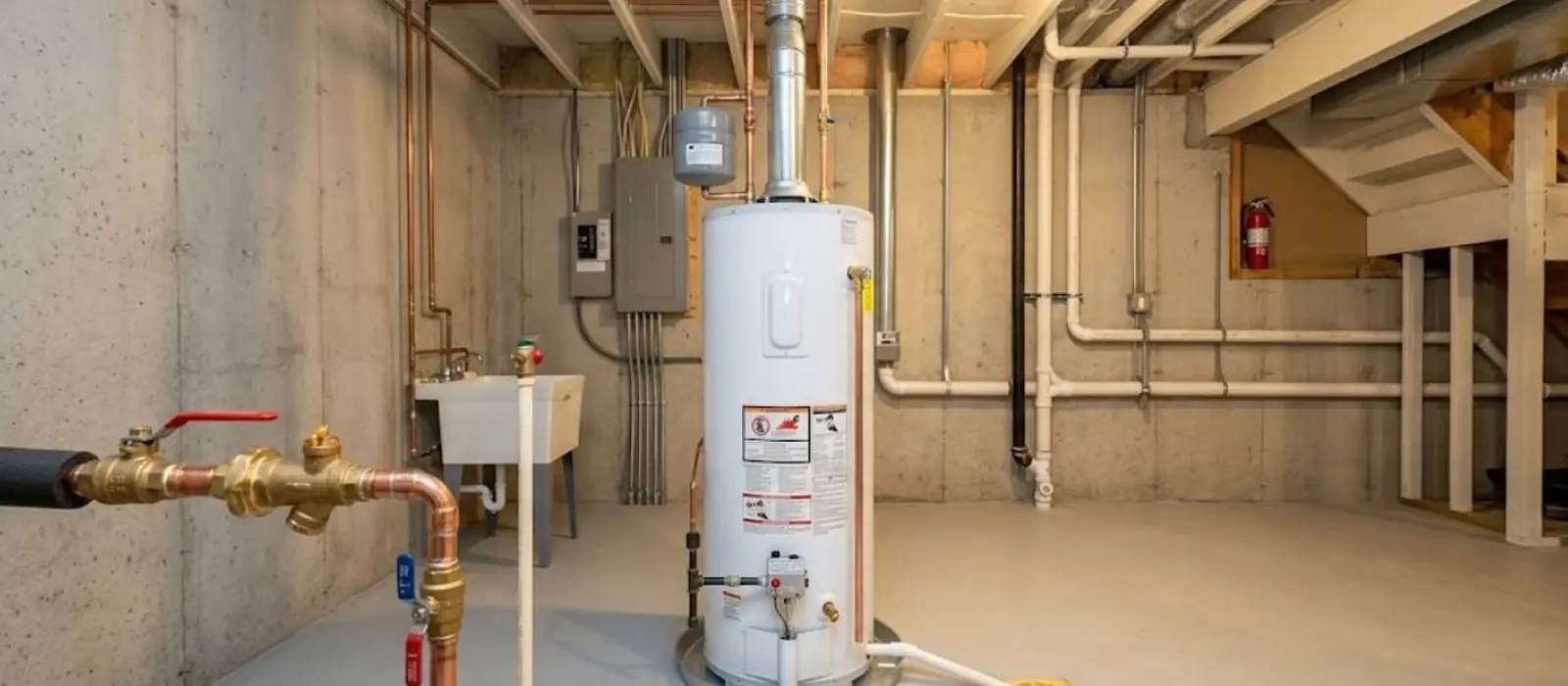
A water heater replacement price depends on four things more than any other: the type of heater, the fuel it burns or uses, how it vents or connects, and what the old installation needs to meet current code. Two homes on the same street can land far apart, because one is a like-for-like swap and the other needs new venting and a new electrical circuit.
No honest number exists until a plumber knows your setup. The ranges below are typical for the United States, they are not a quote, and they vary by region and by what the job involves. Call (860) 397-8103 and describe your heater, and you get a clear price before work starts.
Typical ranges by heater type (not a quote)
These are general US installed ranges for common heater types, shown only so you can judge whether a price is in the right neighborhood. They leave out gas line work, permit fees and utility charges, which vary too much to generalize.
| Heater type | Typical installed range | What pushes it up |
|---|---|---|
| Standard electric tank, 40 to 50 gallon | $1,200 to $3,000 | Larger tank, new circuit or wiring, tight access |
| Standard gas tank, 40 to 50 gallon | $1,500 to $3,500 | Venting changes, flue liner, code upgrades |
| Gas tankless | $3,500 to $7,500 and up | New venting, larger gas supply, condensate drain |
| Electric tankless | $2,000 to $4,500 and up | Panel capacity, heavy-gauge wiring |
| Heat pump (hybrid) tank | $3,000 to $6,500 and up | Room clearance, condensate drain, 240-volt circuit |
The factors that move the total
Start with capacity. A 40-gallon tank costs less than an 80-gallon one, and a family of five needs more hot water than a couple. A tank that is too small leads to cold showers, and one that is too big wastes standby heat all day. Your plumber can size it from the number of bathrooms and your daily habits.
Fuel type and conversion
Swapping gas for gas, or electric for electric, is the cheapest path. Changing fuel adds work. Going from gas to electric or a heat pump means a new circuit, and going the other way means a gas supply line and venting. Conversion can still pay off over time, but it is a bigger job than a swap.
Venting
Atmospheric gas heaters vent up a chimney or flue. Newer high-efficiency units often vent through plastic pipe out a side wall. If your old flue liner is damaged or the chimney is oversized for the new unit, venting work can add a real amount to the job.
Code upgrades
When a heater is replaced, the new installation generally has to meet the code that applies today, not the one from when your house was built. That can mean a drain pan, a discharge pipe for the relief valve, earthquake-style strapping where required, or updated shutoff valves. Ask the Rocky Hill building department what applies to your job.
Expansion tank
A thermal expansion tank absorbs the pressure that builds as water heats in a closed system. Many homes with a check valve or pressure regulator at the meter need one. It is a modest part, but it is a real line on the bill, and skipping it can shorten the life of the new heater.
Removal and disposal
The old tank is heavy, full of sediment and awkward to carry out of a basement. Haul-away is sometimes included and sometimes listed separately. Ask which one you are getting so the numbers compare fairly.
What a clear price should include
When you compare two prices, check that both cover the same scope. A low number that leaves out venting, an expansion tank or haul-away is not actually lower.
What moves the price
- The heater: brand tier, capacity, efficiency and the listed recovery rate.
- Labor: draining and removing the old unit, setting the new one and making connections.
- Materials: new supply connectors, shutoff valves, relief valve discharge pipe and fittings.
- Venting and gas or electrical changes needed to meet current code.
- Expansion tank, drain pan and any required seismic or safety strapping.
- Permit handling and inspection, if your building department requires them.
- Haul-away of the old unit and timing: nights and weekends are priced differently from a weekday.
Describe your setup to the dispatcher at (860) 397-8103 and ask what the price includes.
Repair or replace?
A leaking tank cannot be repaired, because the leak is the steel liner failing. A bad thermostat, element or gas valve on a younger tank often can be. Our water heater repair page covers the signs, and a tank near the end of its usual life is usually better replaced than patched.
Cost mistakes to avoid
- Buying the cheapest unit without checking capacity or recovery rate for your household.
- Comparing prices that cover different scope, such as one with venting work and one without.
- Skipping the expansion tank or relief valve discharge pipe to save a small amount.
- Waiting for a tank to fail, then paying emergency pricing on a flooded floor.
- Ignoring the age of the old tank. Most tank heaters last roughly 8 to 12 years, and the data plate usually shows the manufacture date.
- Assuming a bigger tank is always better. Extra gallons mean extra standby heat loss.
Rocky Hill homes and what that means for the job
Rocky Hill added most of its housing between 1960 and 1990, and about 39 percent of units were multi-family in 2010. That means many heaters sit in tight basement corners, utility closets or condo mechanical rooms. Tight access adds labor and sometimes limits the tank size or type that fits.
Older homes of that era often have an older flue or a chimney shared with a furnace or boiler. Plan for a venting check when you replace a gas heater. Rocky Hill gets water and sewer service through MDC, and MDC notes that hot water can carry more minerals than the cold supply, so tank sediment is worth flushing on any heater you keep.
Source type: town planning document, census counts, and water utility lead-safety information
How to get a price you can compare
Read the data plate
Note the brand, capacity, fuel and model number on the label of your current heater. Have the age handy.
Describe the location
Say whether it is in a basement, closet, attic or garage, and how the flue or vent runs.
Ask what is included
Ask about venting, expansion tank, haul-away and permit handling, and whether after-hours work changes the price.
Decide on tank type
A like-for-like swap is the least work. If you want tankless or a heat pump, say so up front so the plumber can check venting, gas supply or electrical capacity.
If your heater is leaking right now
Shut off the cold supply valve above the tank. For electric, turn off the breaker. For gas, turn the control to pilot or off if you can reach it safely. If you smell gas, leave the building and call 911 and the gas utility's emergency number before anything else.
Our 24/7 line handles failed tanks. Read about water heater replacement or the tankless option, and we cover Wethersfield and Newington too.
Questions homeowners ask
What is a typical cost to replace a water heater?
Typical US installed ranges run from roughly $1,200 to $3,500 for a standard tank and more for tankless or heat pump models. That is typical, not a quote. The final number depends on fuel, venting, code upgrades and removal, so call for a clear price before work starts.
Does Rocky Hill require a permit to replace a water heater?
Ask the Rocky Hill building department. Town Hall is at 761 Old Main Street, and permits are handled through the town's online portal and the Building Department. Rules differ by job, so confirm before you start.
Why is an emergency replacement priced differently?
Nights, weekends and holidays are usually priced differently from weekday work, and a same-day swap leaves less time to shop for a unit. If the tank is not leaking badly, shutting off the supply and booking a daytime visit can lower the total.
Is a bigger tank worth the extra cost?
Only if your household needs it. A tank that is too small runs out of hot water, but an oversized one loses heat to the room all day. Your plumber can size it from your bathrooms, fixtures and daily use.
Will insurance pay for a new water heater?
Many standard homeowners policies cover sudden and accidental water damage but not gradual leaks or the worn part itself, so the heater is typically your cost. Policies vary, so read yours or ask your agent.
How long does a tank water heater last?
Most last roughly 8 to 12 years, depending on use, sediment and the unit. Rust at the base, water around the tank and rumbling noises suggest the end is near. Planning the swap beats paying for an emergency one.
Call the 24/7 line, describe the problem, and we confirm what it will cost before any work starts.