If you are adding a bathroom, replacing a vanity, moving a kitchen sink or hooking up a new appliance, call (860) 397-8103 and describe the job. We schedule planned installs for a day that fits, and same-day appointments are available when schedules allow. Our 24/7 line also takes urgent calls if something goes wrong midway.
Installation work is mostly planning. The fixture is the easy part. What matters is where the water comes in, where it drains, how far the drain has to travel and whether the pipe behind the wall can handle the change. This page explains how those decisions get made.
What counts as a plumbing installation
Installation covers anything new or relocated: a toilet, sink, tub, shower, laundry box, dishwasher, ice maker, outdoor spigot or a water treatment device. It also covers the supply and drain pipes that serve them.
If something is leaking or broken right now, you want repair, not installation. See toilet repair or faucet and sink repair for those. If the old fixture is simply worn out and you want a new one, that is a replacement install, which we handle the same way.
Common installs and what each one needs
Each job has its own checklist. The hidden parts are what change the price and the schedule.
| Install | What it needs | What can complicate it |
|---|---|---|
| Toilet | Sound flange, shutoff valve and supply line | Rotted subfloor, low flange after new tile |
| Kitchen or bath faucet | Matching holes, new supply lines, working shutoffs | Stuck old valves, tight vanity |
| Vanity and sink | Supply and drain at the right height and spot | Drain too far from the wall, wrong trap fit |
| Shower or tub valve | Open wall, correct valve depth, drain and vent | Tile work, framing, anti-scald rating |
| Dishwasher, ice maker, washer | Water supply, drain connection, shutoff | No existing valve, nearby electrical |
| New bathroom or kitchen island | Supply, drain and vent runs | Floor framing, slab, distance to the stack |
| Outdoor faucet | Supply from inside, shutoff valve, drain-down | Exterior wall access, winter protection |
Planning a remodel: rough-in comes first
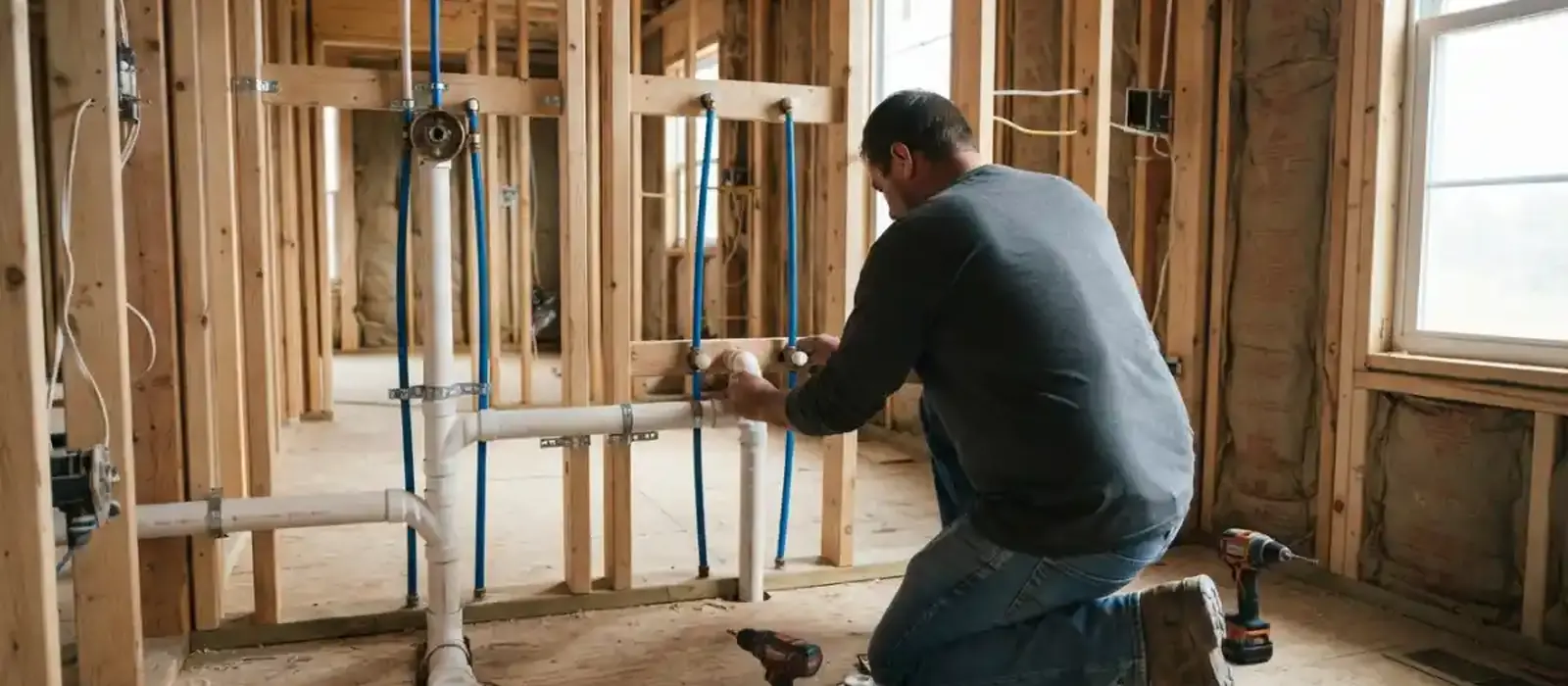
Rough-in is the pipework installed before walls and floors are closed. It sets the position of every drain, vent and supply line, and once drywall or tile goes over it, a change costs far more.
Bring your layout to the call, even a sketch. Tell us which fixtures move and which stay. We check where the nearest drain stack and supply lines are, how far the new fixture sits from them and whether a floor joist or beam is in the way. A toilet in a new spot needs a bigger drain run than a sink does, and every fixture needs a vent.
How an installation job runs
You describe the job
Call and tell us what you are installing, where, and whether walls or floors are open. Photos help the plumber prepare.
We confirm details on site
The plumber looks at access, pipe material, shutoff valves and the route for new lines, then gives a clear price before work starts.
Rough-in or fixture set
For new lines, we run supply, drain and vent before walls close. For simple swaps, we remove the old fixture and set the new one.
Test before we leave
We pressure-check new supply lines, fill and drain each fixture and look at every joint. You see it working before the job is done.
Permits and code: ask the building department
Whether your job needs a permit depends on the scope. Moving drains or adding a bathroom is treated differently from swapping a faucet. For the answer on your specific job, ask the Rocky Hill building department at Town Hall, 761 Old Main Street, 860-258-2700. Cromwell and Wethersfield homeowners should ask their own town.
Connecticut work follows the state building code, which is based on the 2021 International Codes. Ask the building department which parts apply to your project. If a job crosses the street or sidewalk, the town also has a separate street excavation permit, and digging needs a Call Before You Dig request first.
Pipe materials and what they mean for your install
Copper
Common in older homes. It holds up well and can be joined to newer pipe with the right fittings.
PEX
Flexible plastic supply pipe that makes long runs and tight turns easier. It needs proper support and sunlight protection.
Cast iron and galvanized
Older drain and supply pipe that corrodes from the inside. Connecting new lines to it often exposes weak spots. See repiping if replacement is the better path.
PVC and ABS
Drain pipe for modern layouts. Gluing it to old cast iron takes a transition coupling. The type used must match local code.
Appliances and special hookups
Dishwashers, ice makers and washing machines all need a supply valve, a drain connection and a plan for leaks. A washer drain that is too small or too low can overflow. A dishwasher needs an air gap or high loop to keep dirty water out of the machine.
Water heaters and tankless units have their own pages. Start with water heater installation for that job, as it involves venting, fuel and electrical details that sit outside a standard fixture install.
Before the plumber arrives
- Clear the area around the work spot, including under sinks and around toilets.
- Find your main shutoff valve and test that it turns.
- Buy fixtures ahead if you are supplying them, and keep the box and installation sheet.
- Take photos of the space and any existing pipes you can see.
- Know the model numbers of appliances being connected.
What plumbing installation costs
We give a clear price before work starts. Installation pricing depends on the details below, so a phone description helps us set expectations.
What moves the price
- Scope: swapping a faucet is small, moving a drain or adding a bathroom is a larger project.
- Access: open walls and a basement below are easier than a slab floor or a finished ceiling.
- Distance and route: the farther new lines run from existing pipes, the more material and labor.
- Condition of existing pipe: corroded or undersized lines may need repair before tying in.
- Fixtures supplied: you can bring your own, or we can help source them. Prices vary with brand and quality.
- Time of the call: planned installs are scheduled by day. After-hours visits are priced differently.
Ready to plan your job? Call (860) 397-8103 and describe it.
Installing in Rocky Hill homes and condos
Most Rocky Hill homes were built between the 1960s and the 1980s, and about 39 percent of units are condos or apartments. In an older house, original shutoffs and supply lines are often the first thing to replace during an install. In a condo, shared drain stacks and association rules affect when and how work can happen, so check with your building manager before scheduling.
MDC provides water and sewer service here, so if your project changes how a line connects to the public system, ask MDC what applies before work begins.
Questions homeowners ask
Can you install a fixture I bought myself?
Yes, in most cases. Bring the model number to the call so we can check that it fits your layout and what extra parts it needs. Keep the box and the installation sheet. Some fixtures need special valves or mounting parts that are sold separately.
Do I need a permit to install a new fixture or move plumbing?
It depends on the work. We do not state permit rules for a specific job. Ask the Rocky Hill building department at Town Hall, 761 Old Main Street, 860-258-2700. They can tell you what applies to your project and what inspections are involved.
Can you add a bathroom in my basement?
Often yes, but it depends on where the drain stack sits and whether the floor is slab or framed. A below-grade bathroom may need a pump for waste. Describe the space and layout when you call, and the plumber checks on site.
How do I prepare for a plumbing installation?
Clear the work area, find your main shutoff, and gather fixture box and model numbers. Photos of the space help. If walls are open, leave them open until the plumber has finished and tested the new lines.
Do you handle urgent plumbing calls as well as installations?
Yes. The same 24/7 line takes emergencies like active leaks, overflowing toilets and burst pipes, along with planned installs. Planned jobs are scheduled for a day that fits, and urgent calls are handled as they come in.
Do you serve Wethersfield, Newington and Cromwell?
Yes. We serve those towns from Rocky Hill, and the dispatcher confirms availability for your address when you call. See our service area page for details on how coverage works.
Call the 24/7 line, describe the problem, and we confirm what it will cost before any work starts.